
Hydrocephalus
Hydrocephalus
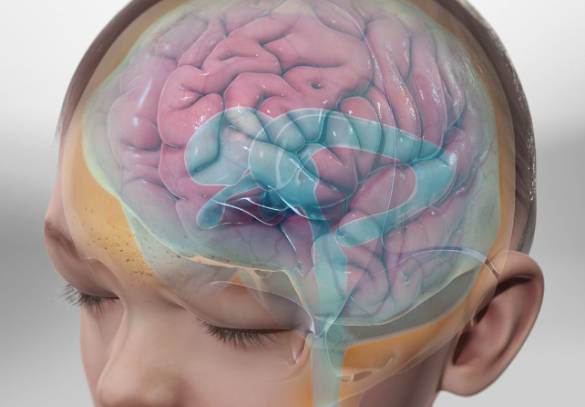
Hydrocephalus is the buildup of fluid in the cavities (ventricles) deep within the brain. The excess fluid increases the size of the ventricles and puts pressure on the brain.
Cerebrospinal fluid normally flows through the ventricles and bathes the brain and spinal column. But the pressure of too much cerebrospinal fluid associated with hydrocephalus can damage brain tissues and cause a range of brain function problems.
Hydrocephalus can happen at any age, but it occurs more frequently among infants and adults 60 and over. Surgical treatment for hydrocephalus can restore and maintain normal cerebrospinal fluid levels in the brain. Different therapies are often required to manage symptoms or problems resulting from hydrocephalus.
Symptoms
Common signs and symptoms of hydrocephalus in infants include:
Changes in the head
- An unusually large head
- A rapid increase in the size of the head
- A bulging or tense soft spot (fontanel) on the top of the head
Physical signs and symptoms
- Nausea and vomiting
- Sleepiness or sluggishness (lethargy)
- Irritability
- Poor eating
- Seizures
- Eyes fixed downward (sunsetting of the eyes)
- Problems with muscle tone and strength
What causes hydrocephalus?
Swollen ventricles in the brain cause hydrocephalus.
To understand how hydrocephalus develops, it’s important to understand the function of CSF in the brain, how too much can cause adverse effects right across the body, and what can cause hydrocephalus.
Why is cerebrospinal fluid important?
CSF usually flows through your brain and spinal cord. This vital fluid protects the brain and spinal cord, acting as a cushion that absorbs the shock from impact or injury. It also helps by transporting waste products away from the central nervous system, helping it work at full capacity.
Your brain and spinal cord support:
- muscle movement
- organ function
- cognitive processes, like memory
Why do cerebrospinal fluid levels increase?
Under certainconditions, the amount of CSF in your brain increases. The amount of CSF can increase when:
- a blockage develops that prevents CSF from flowing in its usual way
- there’s a decrease in the ability of blood vessels to absorb it
- your brain produces an excess amount of it
Too much of this fluid puts your brain under too much pressure. This increased pressure can cause brain swelling, which can damage your brain tissue and lead to some of the functional and cognitive issues that occur due to hydrocephalus.
Hydrocephalus from birth
In some cases, hydrocephalus starts before a baby is born. This can result from:
- a birth irregularity in which the spinal column doesn’t close
- a genetic anomaly
- certain infections that occur during pregnancy, like rubella
Diagnosing hydrocephalus
Here’s what to expect when seeing a doctor about hydrocephalus.
Physical examination
If you suspect that you or your child has hydrocephalus, your doctor will perform a physical exam to look for signs and symptoms. In children, doctors check for:
- eyes that are sunken in
- slow reflexes
- a bulging fontanel
- a head circumference that’s larger than usual for their age
Ultrasound scan
Your doctor may also use an ultrasound to get a closer look at the brain. These tests use high-frequency sound waves to create images of the brain. This type of ultrasound can only be done in babies whose fontanel (soft spot) is still open.
Magnetic resonance imaging (MRI) scans
These can indicate signs of excess CSF. MRIs use a magnetic field and radio waves to make a cross-sectional image of the brain.
Computerized tomography (CT) scans
These can also help diagnose hydrocephalus in children and adults. CT scans use several different X-rays to form a cross-sectional image of the brain. These scans can show enlarged brain ventricles that result from too much CSF.
Call Today
+91-8766677505
Email Address
gastrocareclinic@yahoo.com