
Chorionic Villus Sampling
Chorionic Villus Sampling
Chorionic villus sampling (CVS) is a type of prenatal testing. You may choose to undergo this genetic testing during pregnancy to check the fetus for health conditions like Down syndrome. It also confirms sex.
CVS testing takes a small sample of cells from the placenta, the organ that forms during pregnancy to deliver nourishment to the fetus.
The cells your healthcare provider removes are called chorionic villi. They’re formed from the fertilized egg, so they usually have the same genes as the fetus.
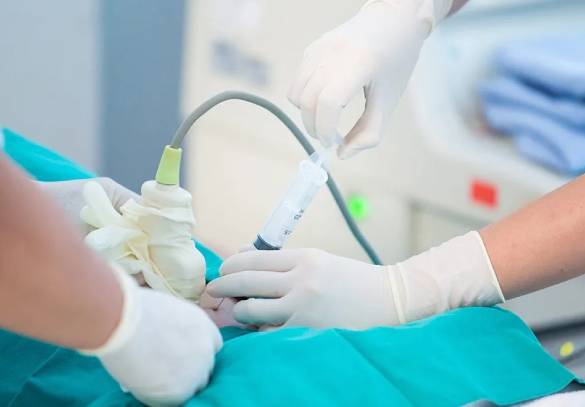
What’s the difference between CVS testing and amniocentesis?
Both CVS testing and amniocentesis are types of prenatal diagnostic testing. But providers perform them at different points during the pregnancy. CVS testing happens earlier in the pregnancy than amniocentesis. Typically, a CVS is performed at 10 to 13 weeks while amniocentesis is performed after 15 weeks gestation. In addition, there is some difference in what they test for. For example, amniocentesis can test for defects of the neural tube, the structure that turns into your baby’s brain and spinal cord. Examples of these defects include spina bifida. CVS cannot detect these conditions.
Your healthcare provider can talk to you about your risk and recommend one of these tests, both of them or neither.
Who needs CVS testing?
CVS testing is not a standard part of prenatal care. Your healthcare provider may offer this option if you have certain risk factors, abnormalities detected on early ultrasounds or abnormal genetic (vs blood) screening. Having the test can detect genetic conditions during early pregnancy. But you can also choose to skip the test. It’s up to you.
Providers usually offer CVS testing if you:
- Already have a child with a known genetic condition.
- Are 35 or older on your due date, as the risk of having a baby with a genetic problem increases with the mother’s age.
- Had a previous screening or test that indicated a higher risk of having a child with a genetic condition. For example, noninvasive prenatal testing (NIPT), often done at 10 to 13 weeks, looks for fetal DNA in the your blood.
- Have a family history of a genetic condition, or your partner does.
What diseases or disorders does chorionic villus sampling identify?
CVS can help identify certain genetic diseases, including problems with chromosomes. These cell structures hold fetal DNA. CVS can detect if there are extra or missing chromosomes or if any have significant changes to their structures. These types of chromosomal changes can lead to birth defects and other problems.
Conditions CVS tests for include:
- Down syndrome, or trisomy 21.
- Cystic fibrosis.
- Sickle cell disease.
- Tay-Sachs disease.
- Trisomy 18, or Edward syndrome.
How will I feel after CVS testing?
You may feel some cramping after the test. Some light vaginal spotting is normal. If your provider used a needle, you may also feel some soreness where they inserted it. You can typically go back to your regular activities the next day.
Call Today
+91-8766677505
Email Address
gastrocareclinic@yahoo.com