
Colonoscopy
Colonoscopy
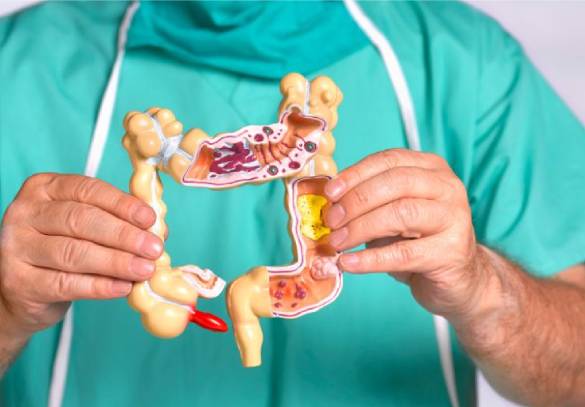
A colonoscopy (koe-lun-OS-kuh-pee) is an exam used to look for changes — such as swollen, irritated tissues, polyps or cancer — in the large intestine (colon) and rectum.
During a colonoscopy, a long, flexible tube (colonoscope) is inserted into the rectum. A tiny video camera at the tip of the tube allows the doctor to view the inside of the entire colon.
If necessary, polyps or other types of abnormal tissue can be removed through the scope during a colonoscopy. Tissue samples (biopsies) can be taken during a colonoscopy as well.
Why it’s done
Your doctor may recommend a colonoscopy to:
- Investigate intestinal signs and symptoms. A colonoscopy can help your doctor explore possible causes of abdominal pain, rectal bleeding, chronic diarrhea and other intestinal problems.
- Screen for colon cancer. If you’re age 45 or older and at average risk of colon cancer — you have no colon cancer risk factors other than age — your doctor may recommend a colonoscopy every 10 years. If you have other risk factors, your doctor may recommend a screen sooner. Colonoscopy is one of a few options for colon cancer screening. Talk with your doctor about the best options for you.
- Look for more polyps. If you have had polyps before, your doctor may recommend a follow-up colonoscopy to look for and remove any additional polyps. This is done to reduce your risk of colon cancer.
- Treat an issue. Sometimes, a colonoscopy may be done for treatment purposes, such as placing a stent or removing an object in your colon.
How you prepare
Before a colonoscopy, you’ll need to clean out (empty) your colon. Any residue in your colon may make it difficult to get a good view of your colon and rectum during the exam.
To empty your colon, your doctor may ask you to:
- Follow a special diet the day before the exam. Typically, you won’t be able to eat solid food the day before the exam. Drinks may be limited to clear liquids — plain water, tea and coffee without milk or cream, broth, and carbonated beverages. Avoid red liquids, which can be mistaken for blood during the colonoscopy. You may not be able to eat or drink anything after midnight the night before the exam.
- Take a laxative. Your doctor will usually recommend taking a prescription laxative, usually in a large volume in either pill form or liquid form. In most instances, you will be instructed to take the laxative the night before your colonoscopy, or you may be asked to use the laxative both the night before and the morning of the procedure.
- Adjust your medications. Remind your doctor of your medications at least a week before the exam — especially if you have diabetes, high blood pressure or heart problems or if you take medications or supplements that contain iron.
Also tell your doctor if you take aspirin or other medications that thin the blood, such as warfarin (Coumadin, Jantoven); newer anticoagulants, such as dabigatran (Pradaxa) or rivaroxaban (Xarelto), used to reduce risk of blot clots or stroke; or heart medications that affect platelets, such as clopidogrel (Plavix).
You may need to adjust your dosages or stop taking the medications temporarily.
After the procedure
After the exam, it takes about an hour to begin to recover from the sedative. You’ll need someone to take you home because it can take up to a day for the full effects of the sedative to wear off. Don’t drive or make important decisions or go back to work for the rest of the day.
You may feel bloated or pass gas for a few hours after the exam, as you clear the air from your colon. Walking may help relieve any discomfort.
You may also notice a small amount of blood with your first bowel movement after the exam. Usually this isn’t cause for alarm. Consult your doctor if you continue to pass blood or blood clots or if you have persistent abdominal pain or a fever. While unlikely, this may occur immediately or in the first few days after the procedure, but may be delayed for up to 1 to 2 weeks.